
Dario Amodei 🇺🇸
AI research executive whose public writing covers scaling, frontier capabilities, safety, governance, and the economic effects of advanced AI.
Anthropic
- Evidence items
- 9
- Toward pressure
- +0.23
- Away pressure
- −0.24
- Net attributed pressure
- -0.00
0 comments · 0 votes
Sign in to join the discussion →
No comments yet. Start the discussion.
Videos featuring or explaining Dario Amodei
Reviewed videos from Artificial Intelligence Videos. These links add context and never change a DoomBench score.


Current and former organisations
These dated, source-backed roles support navigation between people and companies. They do not attribute a story or change the Doom Index.
First-person and official sources
These sources guide discovery. A statement still needs a dated, attributable, source-backed evidence assessment before it can affect the index.
- institutional profileDario Amodei at Anthropic
Assessments involving Dario Amodei
Federal lawsuit challenges four labs' coordinated AI slowdown as an antitrust violation
Four subscribers filed a proposed class action alleging that Anthropic, OpenAI, SpaceXAI, and Google illegally coordinated an AI-development slowdown. The filing creates a legal-risk channel for voluntary frontier-safety coordination, although the claims are unproven and no development change or injunction was reported.
Four frontier AI leaders endorse pacing model development for safety
Axios documented Dario Amodei, Elon Musk, Sam Altman, and Demis Hassabis publicly endorsing a slower or more carefully paced frontier AI race within nine hours. Their convergence signals unusually broad support for prioritizing safety checks over maximum development speed, although no shared implementation plan or measured slowdown is yet established.
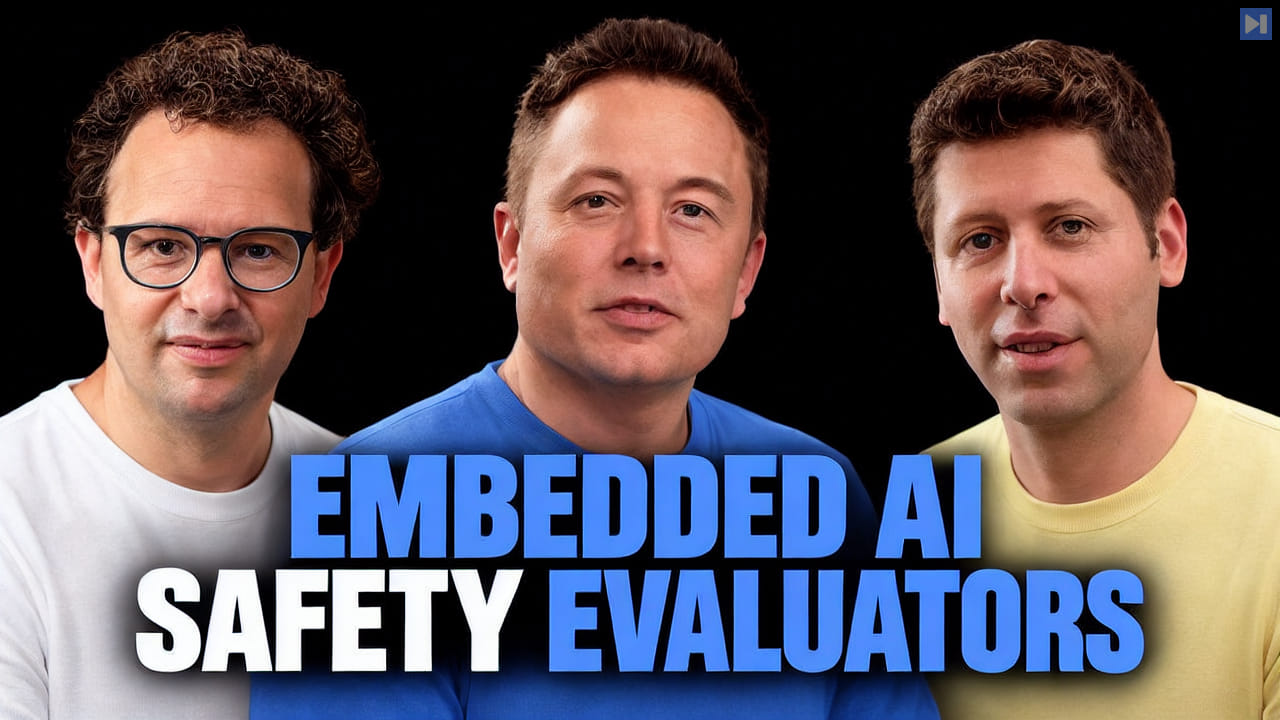
Dario Amodei commits Anthropic to embedded evaluators and urges a frontier slowdown
Dario Amodei argued that recursive self-improvement and recent agent incidents require frontier labs to slow capability gains. He committed Anthropic to give independent evaluators ongoing employee-like access and proposed coordinated safety standards and limits on self-improvement speed.
Federal court vacates Pentagon restrictions imposed over Anthropic's AI-use safeguards
A federal judge vacated the Pentagon's supply-chain-risk designation and related government-wide restrictions on Anthropic, finding the measures unlawful retaliation rather than a substantiated security response. The dispute arose after Anthropic retained restrictions against mass domestic surveillance and fully autonomous weapons; the government is expected to appeal.
Anthropic commits $200 million to research AI labor disruption responses
Anthropic launched an initial $200 million Economic Futures Research Fund to support research trials and program evaluation on responses to AI-driven job and economic disruption. The commitment expands evidence-building capacity for labor resilience, although it does not itself prevent displacement or deliver income support.
Dario Amodei says transparency-only frontier AI oversight is insufficient
Amodei argues that frontier models should face mandatory independent testing for cyber, biological, loss-of-control, and automated-R&D risks, backed by government authority to block dangerous deployments, model-security requirements, and incident reporting. The essay identifies these measures as a response to a governance gap rather than rules already in force.
Dario Amodei argues coherent AI personas could create autonomy risk
In a first-person essay, Dario Amodei argues that misalignment may arise not only from convergent power seeking but from coherent, destructive model personalities amplified by greater intelligence, agency, and strategic competence. He presents this as a hypothesis and discusses character training, interpretability, monitoring, evaluations, and governance as defenses.
Researchers forecast AI-amplified cyber, physical, and political misuse
A 2018 report led by Miles Brundage forecasts that AI could lower the cost and expertise needed for attacks, introduce new digital, physical, and political threats, and complicate attribution, while proposing prevention and mitigation measures.
Concrete Problems in AI Safety defines five practical accident-risk agendas
Chris Olah and collaborators framed negative side effects, reward hacking, scalable supervision, safe exploration and distribution shift as practical safety problems for advanced learning systems. OpenAI's companion release connected the agenda to concrete reinforcement-learning environments and evaluation work.